What My Wilted Mint Taught Me About Care, Heat, and Listening
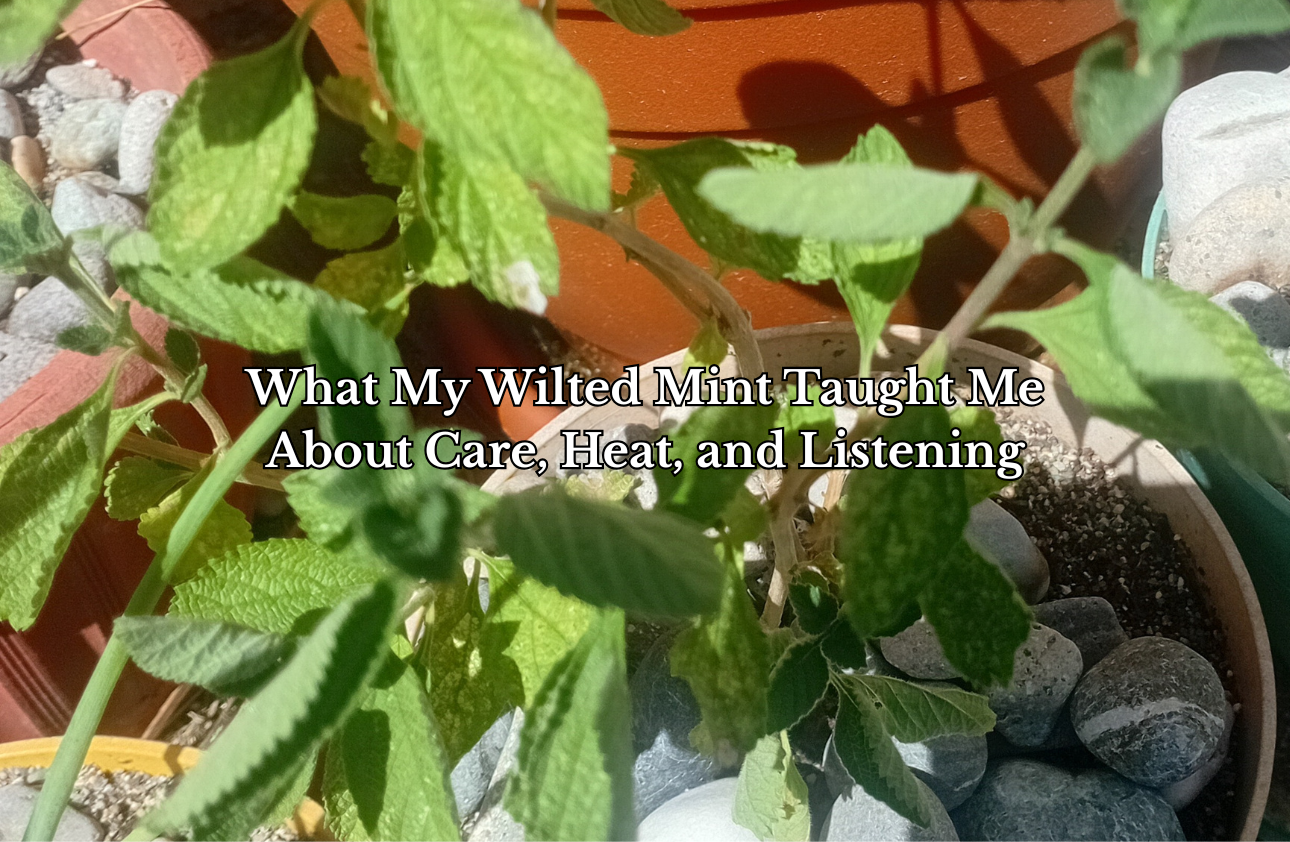
Saturday morning, January 31, I stepped outside and did what I have been doing more intentionally these days; I checked in on my plants. That’s when I noticed it. My oldest green mint plant looked… tired. Not dead. Not dramatic. Just slightly wilted, like it was trying to tell me something quietly.
This mint was planted in December. It’s one of three, and although it’s still small, it’s noticeably stronger than the others. I water it three to four times per week, and I’ve been growing it intentionally for tea and wellness, not for aesthetics. So naturally, a question came up: Is it getting too much sun?
In This Article:
Why I Started Growing Mint
Before I get into what I learned, let me back up a bit. When I decided to start growing mint in December, I had a clear purpose in mind. I wanted fresh herbs for my tea. Something I could step outside and harvest whenever I needed it. There’s something special about using herbs you’ve grown yourself, watching them develop from tiny plants into something useful and nourishing.
I chose mint because it’s known for being hardy and relatively easy to grow. Or so I thought. What I didn’t fully appreciate at the time was how different container gardening would be from what I had read about mint thriving “almost anywhere.” The reality of pots, heat, and limited space would teach me lessons I hadn’t anticipated.
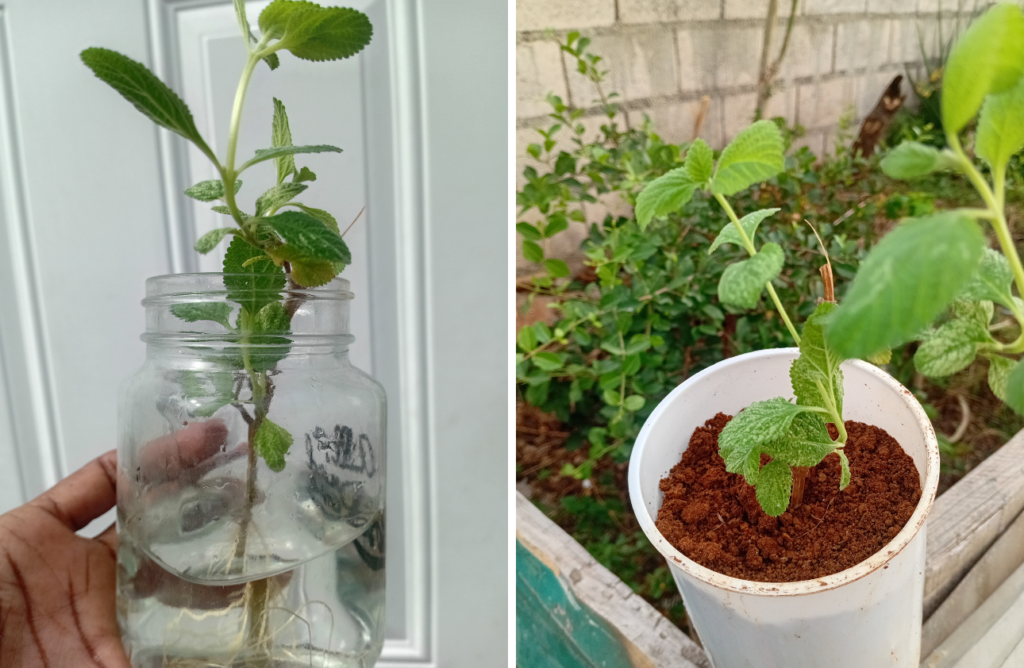
The early stage of my green mint – one of my babies
Asking the Village Instead of Pretending I Know
Instead of guessing or spiraling into worry, I did what I often do. I asked my community.
I shared two photos of the plant in its wilted state and posted a simple question on Facebook and Instagram: “This morning I looked at my little green mint plant and noticed it looked a bit wilted. I water it 3-4 times weekly. Do you think it’s getting too much sun?”
What came back reminded me why community knowledge matters. The responses were honest, practical, and rooted in experience, not theory.
The consensus?
- Too much direct sun
- Potted plants heat up faster
- Mint prefers partial shade
And one surprise I didn’t see coming…
The Decorative Stones Lesson
One comment from Randy stopped me in my tracks:
Remove the stones as they can get hot and maybe put plant in partial shade as pot can also get hot and stress the plant.
I had added decorative stones for neatness and moisture retention, thinking I was doing something helpful. What I didn’t realize was that those stones were trapping heat, warming the soil, and potentially stressing the roots, especially in a pot exposed to the sun.
That was a big “aha” moment for me.
Sometimes what looks good isn’t what feels good, for plants or for people. This is one of those common container gardening mistakes that seems harmless at first. Decorative stones, rocks, and pebbles can actually work against you in hot climates or during sunny seasons. They absorb heat during the day and transfer it directly to the soil, creating a microwave effect for your plant’s roots. For heat-sensitive herbs like mint, this can mean the difference between thriving and barely surviving.
Pots vs Ground: Choosing What Works for Your Life
Several people mentioned that mint thrives best in the ground, where watering is easier, and the roots can spread freely.
That’s true.
But I also live in a space where planting in the ground isn’t an option, and that’s okay. Pots come with their own benefits:
- Mobility – I can move plants to better locations as I learn
- Control – No wild spreading into other garden areas
- Containment – Mint can be wildly invasive and take over entire gardens
They also come with responsibility:
- Soil dries faster in containers
- Roots heat up quicker in confined spaces
- Plants need closer observation and more frequent care
This moment reminded me that there is no perfect setup, only intentional care. Container gardening requires a different mindset. You are not just growing a plant; you’re managing an entire ecosystem in a limited space. The soil temperature, moisture levels, and even the color of your pot can affect how your plant performs.
| 🌿 Growing plants for wellness in small spaces? I created a free Herbal Tea Starter Guide with the exact teas I drink and how I brew them gently at home. 👉 Download it here. |
Understanding Mint’s Real Needs
As I scrolled through the comments and reflected on what people were telling me, a clearer picture emerged of what mint actually needs, not what I assumed it needed.
Mint prefers:
- 4-6 hours of sunlight, but prefers morning sun over harsh afternoon heat
- Partial shade, especially in warmer climates
- Consistently moist (not waterlogged) soil
- Cool roots and moderate temperatures
Signs your mint is struggling:
- Wilting despite regular watering (too much heat or sun)
- Yellow leaves (overwatering or nutrient deficiency)
- Crispy, brown edges (underwatering or too much direct sun)
- Leggy, sparse growth (not enough light)
What I realized is that I had been watering on a schedule – 3 to 4 times weekly – instead of actually observing what the plant was telling me. The wilting wasn’t about the frequency of watering; it was about the environment I had placed it in.
What I Changed After Listening
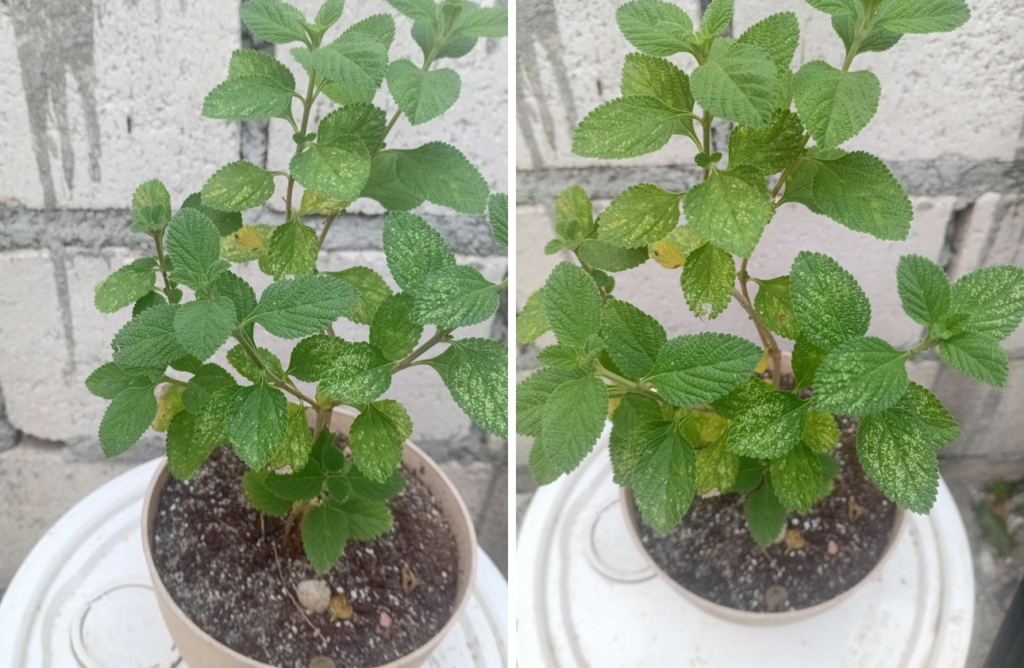
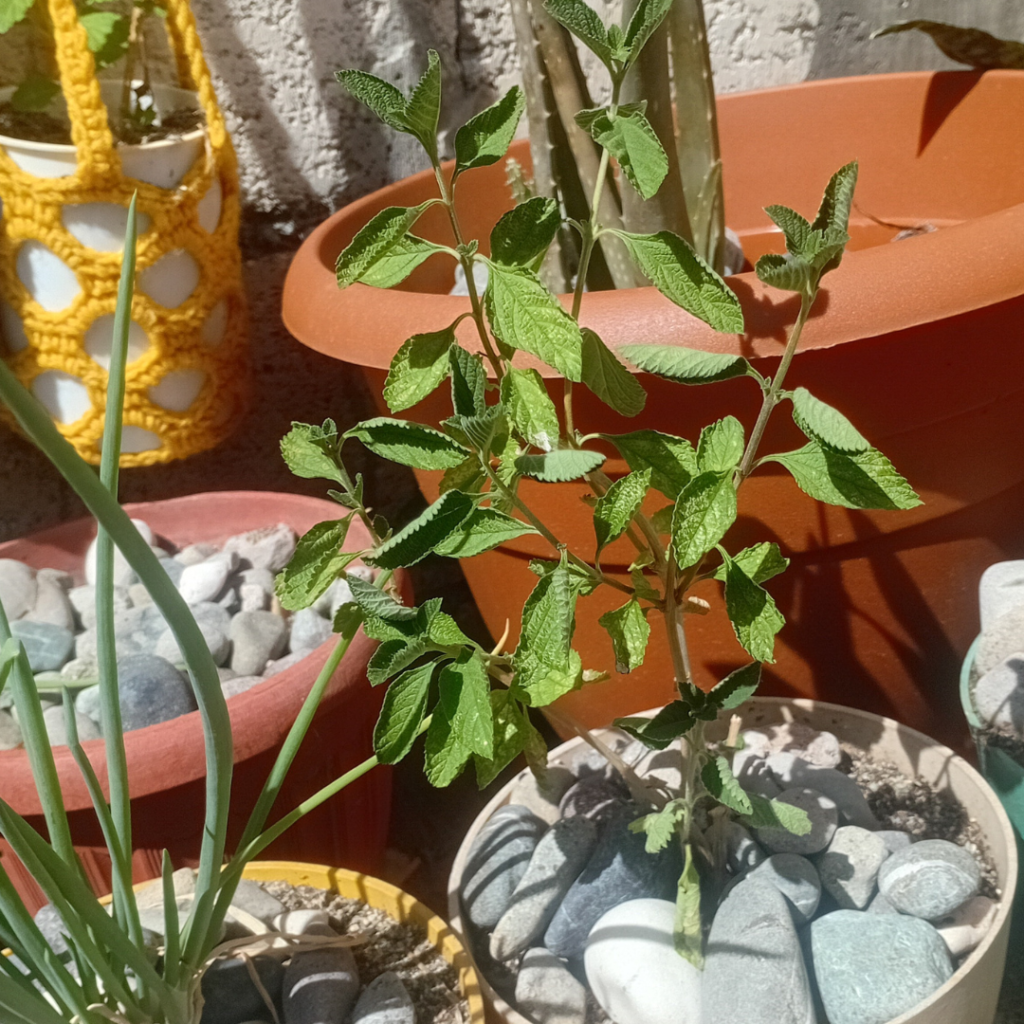
Took this photo on Sunday after changing its location, but it’s still not 100%. Giving it time.
Based on the feedback and my own observation, I decided to:
- Move the mint to partial shade – A spot where it gets morning sun but is protected during the hottest part of the day.
- Remove the decorative stones immediately – Let the soil breathe and stay cooler.
- Continue watering consistently, but now watch the leaves more than the calendar – The plant will tell me when it needs water.
- Trust that wilting isn’t failure, it’s communication – Plants don’t scream. They whisper first.
I also made a mental note to check the soil temperature occasionally. If the pot feels hot to the touch in the afternoon, that’s a sign the roots are getting stressed.
Common Container Gardening Mistakes (That I Made)
Looking back, I can see several mistakes I made that are probably common for new gardeners:
- Prioritizing aesthetics over function – Those stones looked neat and tidy, but they weren’t serving my plant’s actual needs.
- Following a rigid watering schedule – Instead of responding to what I observed, I stuck to a routine that didn’t account for changing conditions.
- Assuming “hardy” means “indestructible” – Yes, mint is resilient, but it still has preferences and limits.
- Not considering the container’s role – The pot itself may affect soil temperature and how quickly the plant dries out. I hadn’t thought about the pot getting hot in the sun.
- Skipping the research on microclimate – What works for mint in the ground or in cooler climates doesn’t automatically translate to container growing in direct sun.
The Bigger Lesson
This little mint plant reminded me of something simple and powerful: Care isn’t about doing more. It’s about doing what’s appropriate.
- Sometimes, too much sun looks like love.
- Sometimes aesthetics get in the way of well-being.
- And sometimes the best answers come not from experts, but from people who have lived it.
The community that showed up with advice wasn’t reciting textbook information. They were sharing what they had learned through trial and error, through their own wilted plants and recovered herbs. That kind of knowledge, rooted in real experience, is invaluable.
| 🌿 Growing plants for wellness in small spaces? I created a free Herbal Tea Starter Guide with the exact teas I drink and how I brew them gently at home. 👉 Download it here. |
What Happens Next
I will be checking back in with this mint soon, and when it perks up, I’ll share that too, because growth is a process, not a performance.
I plan to monitor the plant over the next week or two and document any changes. I’m curious to see how quickly it responds to the adjustments. Will it perk up within a few days? Will new growth emerge? I’ll be paying attention not just to whether it survives, but to whether it thrives.
I’m also applying these lessons to my other two mint plants, which are younger and smaller but will eventually face similar challenges.
Quick Care Guide: Growing Mint in Containers
If you’re growing mint in pots, here’s what I’ve learned (some the hard way):
- Sunlight: 4-6 hours of indirect light or morning sun; avoid harsh afternoon sun
- Water: Keep soil consistently moist but not soggy; check soil daily in hot weather
- Soil: Well-draining potting mix; mint doesn’t like sitting in water
- Container: Use pots with drainage holes; light-colored pots stay cooler than dark ones
- Temperature: Mint prefers cooler conditions; protect from extreme heat
- Avoid: Decorative top dressings that trap heat, especially stones or rocks
- Watch for: Wilting (too much heat/sun), yellowing (overwatering), brown edges (underwatering)
Final Thoughts
This experience with my wilted mint reminded me that the best learning often comes from small moments of attention. I could have ignored the slight wilt, assumed it would work itself out, or panicked and overcompensated. Instead, I asked. I listened. I adjusted.
And in doing so, I learned not just about growing mint, but about the value of community wisdom, the importance of observation over assumption, and the beauty of care that responds rather than controls. My mint plant is teaching me patience, attentiveness, and humility, one wilted leaf at a time.
Have you had a similar experience with your plants teaching you unexpected lessons? I would love to hear about it in the comments, or you can message me on Instagram @gillianlarmond.