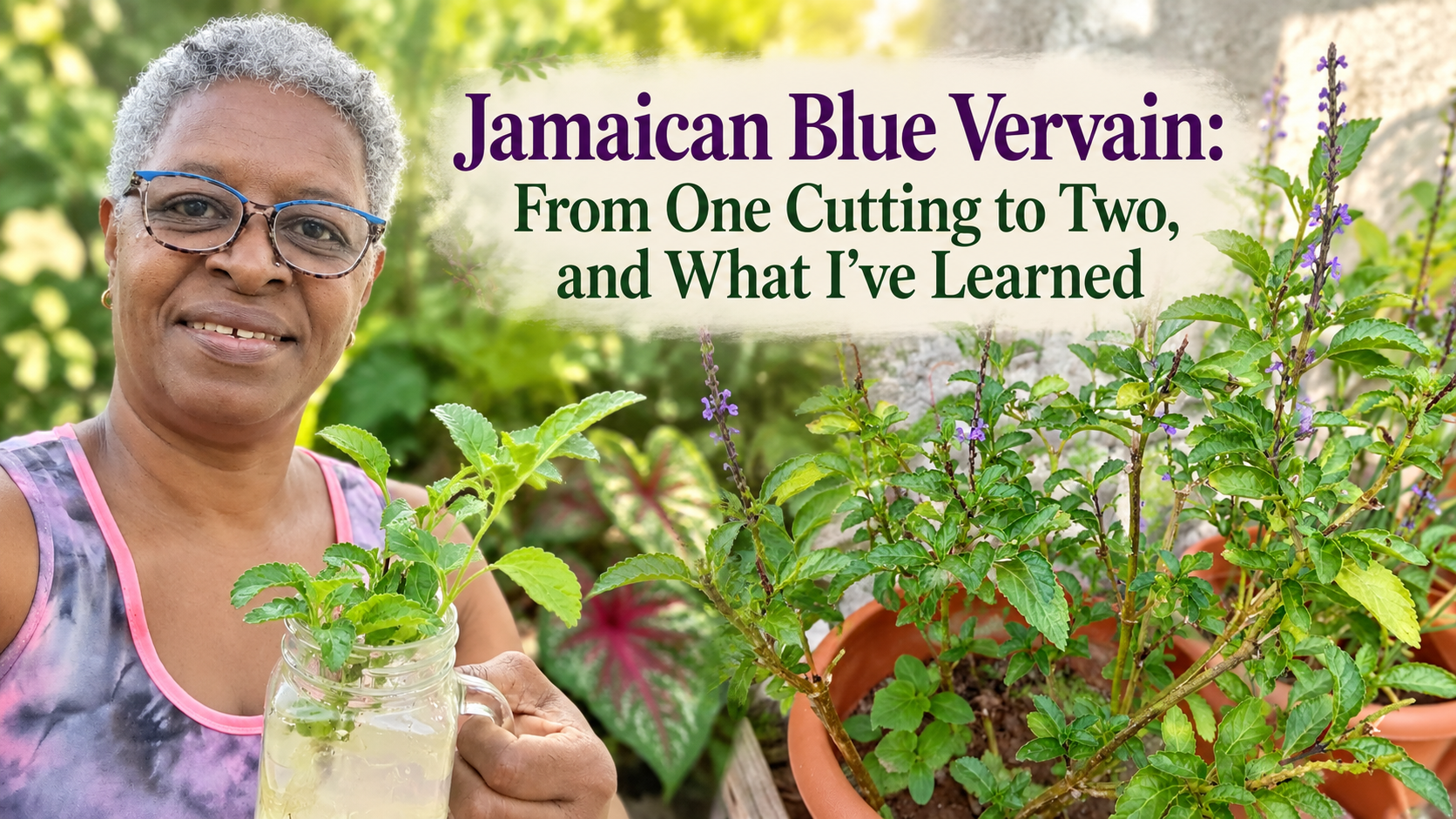
Jamaican Blue Vervain: From One Cutting to Two, and What I’ve Learned
Jamaican Blue Vervain has become one of the most interesting herbs in my container garden, and it has taught me more than I expected about growing, learning, and enjoying herbs at home.
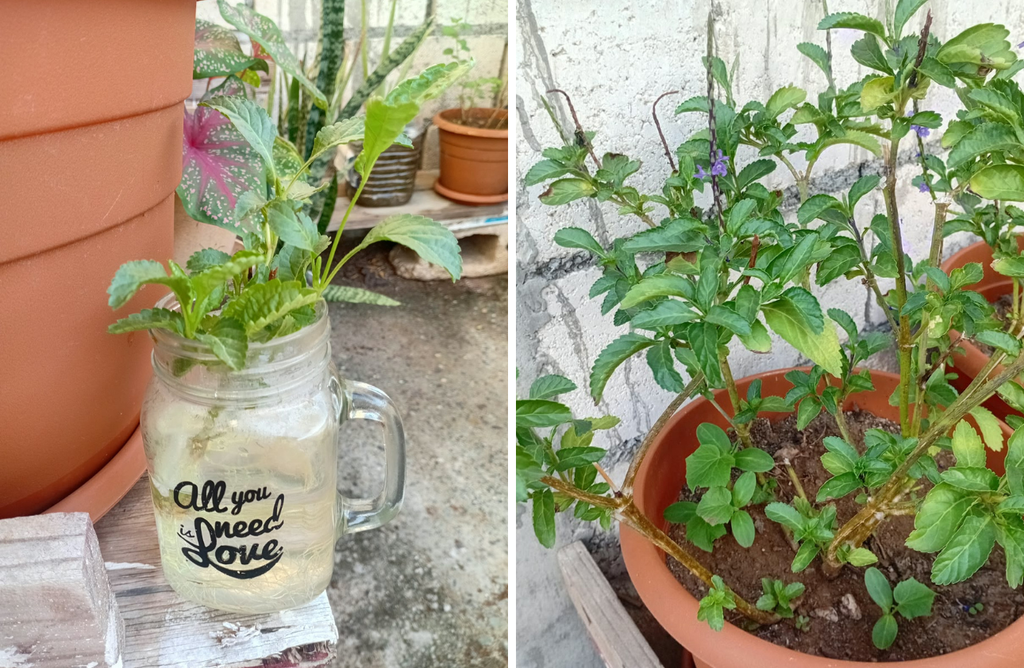
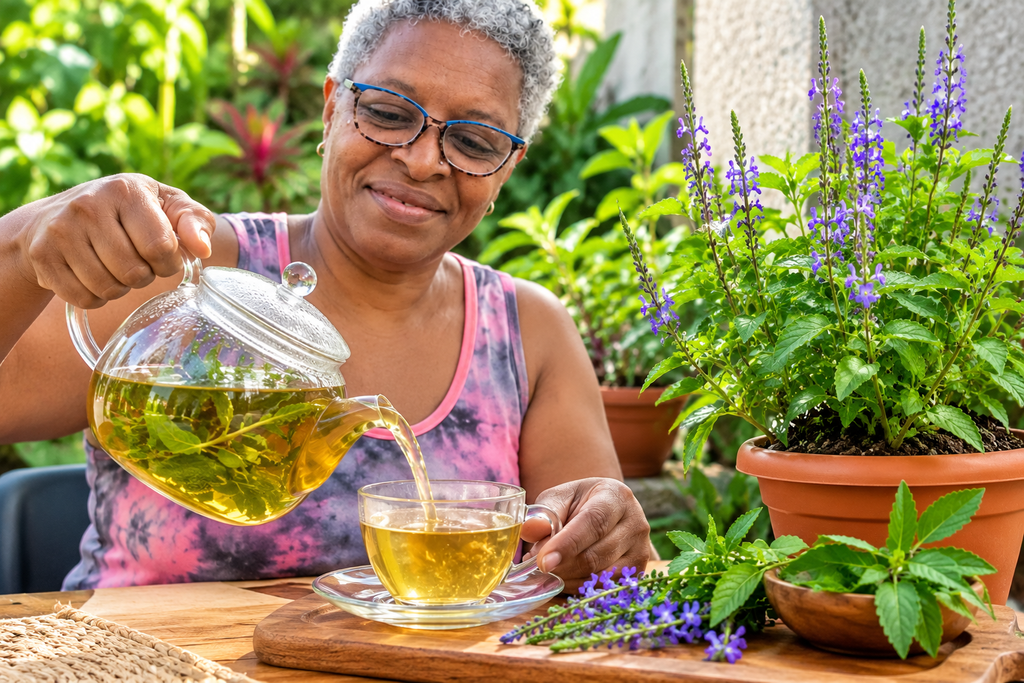
Back in April, I wrote about a small blue vervain cutting sitting in a glass of water, waiting for its roots to develop. Today, that little cutting has grown into a full plant in a terracotta pot in my container garden, with purple-blue flowers rising on long, slim spikes.
Watching it grow has been such a lovely experience, and it made me curious about the plant I was growing and the tea I had been enjoying. So, this week, I decided to do a little more research into Jamaican blue vervain, what we know about it, and what I am still learning along the way.
I am not an herbal expert, and I do not pretend to have all the answers. I am a Jamaican woman over 50, building my business and growing herbs in a small backyard, learning one plant at a time.
I enjoy discovering what grows well in the space I have, exploring the traditions surrounding our local herbs, and sharing my experiences with others. In this post, I want to keep three things separate: what tradition says, what researchers have studied, and what I have personally experienced.
What Is Jamaican Blue Vervain?
The plant growing in my pot is Stachytarpheta Jamaicensis, commonly known as Jamaican vervain, Jamaican blue vervain, blue vervain, blue porterweed, or blue snakeweed. It has toothed green leaves, slender stems, and tiny purple-blue flowers that open along long, narrow spikes. My plant has been flowering beautifully, and I love seeing the butterflies and hummingbirds visiting the garden. It is one of those plants that makes a small backyard feel alive, even when you do not have a lot of space to work with.
Here is something I learned during my research that I found particularly interesting. There is another plant, Verbena hastata, that is also commonly called blue vervain in North America. Although the two plants belong to the same family, they are different species.
This matters because information about herbs can sometimes become confusing when different plants share the same common name. When I research Jamaican blue vervain, I want to make sure I am reading about Stachytarpheta jamaicensis, the plant actually growing in my garden, rather than assuming that everything written about blue vervain applies to it.
In This Post
What Tradition Says About Jamaican Blue Vervain
Many of us in Jamaica know blue vervain as a “nerve” herb, a plant that has been used traditionally in our communities and passed down through generations. Written accounts of Jamaican herbal practices mention its use for colds, flu, and asthma, as well as its traditional use as a blood purifier.
In other parts of the Caribbean and Central America, the leaves have also been prepared as tea, while traditional herbal practices in other regions have used the plant for various digestive and other complaints.
I find it fascinating to learn about the different ways people have used plants over the years, especially when it comes to the herbs we grow and see around us every day. Traditional knowledge is an important part of our history and culture, and I believe it deserves to be documented and treated with respect.
At the same time, I think it is important to remember that a traditional use does not automatically mean that a plant has been scientifically proven to treat a particular condition. Both things can be acknowledged without confusing one for the other.
What Research Says About Jamaican Blue Vervain
As I continued researching Jamaican blue vervain, I found a published scientific review from 2016 titled Stachytarpheta jamaicensis (L.) Vahl: From Traditional Usage to Pharmacological Evidence. The review examines the plant’s traditional uses, chemical constituents, laboratory research, animal studies, and available safety information. It was encouraging to find research specifically on the plant growing in my garden, rather than on a different species with a similar name.
However, much of the available research involves laboratory experiments and animal studies, and human evidence is limited, making it difficult to determine whether the plant is effective for the conditions associated with its traditional use. Research into a plant’s chemical compounds or biological activity is a starting point, but it does not automatically establish that drinking the tea will produce the same effects in people. More research is needed to understand its effectiveness and safety properly.
So, I can share what Jamaican blue vervain has traditionally been used for, and I can tell you that researchers have begun investigating the plant. What I cannot honestly do is tell you that its traditional uses have all been proven or promise that drinking the tea will treat a health condition. I would rather be honest about what I know, what I have found in my research, and what remains uncertain. For me, that is part of learning about herbs responsibly.
How I Grow Jamaican Blue Vervain in My Container Garden
One of the things I love about this plant is that it has been growing well in a pot, which makes it suitable for the small backyard garden I am building. I do not have acres of land or a large herb farm, but I am learning how to make the most of the space available to me. My plant has grown from a small cutting into a flowering plant, and watching that transformation has reminded me that you do not always need a big garden to enjoy growing your own herbs.
Watering is one of the things I pay close attention to. Even when the top of the soil looks dry, I test it with my finger to see whether the soil underneath is still damp. If it is, I give it another day before watering. If it feels dry, I give the plant a good drink. This simple habit helps me avoid watering automatically just because the surface looks dry. My plant receives plenty of light, and so far, container growing has worked well for me. I am still learning about its growing needs, and I will continue sharing what I discover as the plant develops.
Queen Gee’s Tip: Get to know your plant rather than watering it on autopilot. Checking the soil before reaching for the watering can is a small habit that can make a difference when you are growing herbs in containers.
How I Prepare My Jamaican Blue Vervain Tea
When I make Jamaican blue vervain tea, I bring filtered water to a gentle boil, add a small handful of fresh leaves and stems, and allow it to steep for about 7 to 10 minutes. I enjoy its slightly earthy flavour, and sometimes I like to add a small piece of ginger to soften the taste. There is something satisfying about making tea from a plant you have grown yourself, especially when you remember how small it was when you first brought the cutting into the garden.
This is the personal preparation method I have been using, not a scientifically established dosage or a recommendation that the tea is suitable for everyone. I have been harvesting from my plant since it became established enough, and I drink the tea from time to time rather than every day. Because there is limited human safety research on Jamaican blue vervain, I would encourage anyone interested in trying it to seek qualified healthcare advice first, particularly if they take medication, have an existing health condition, or are pregnant or breastfeeding.
My Experience With Jamaican Blue Vervain Tea
I usually make a cup during the workday, when I am building my business and working on client projects. Sometimes I get so involved in what I am doing that I need a reason to step away from the screen, sit down for a few minutes, and slow my pace. For me, preparing a cup of tea creates that little pause in the day. I enjoy the earthy taste, the warmth of the cup, and the knowledge that the plant came from my own backyard.
I have noticed that the ritual gives me a calm feeling. That is my personal experience, and I do not assume everyone will feel the same way. I am sharing it because it is part of my journey with this plant.
The Second Cutting: From One Plant to Two
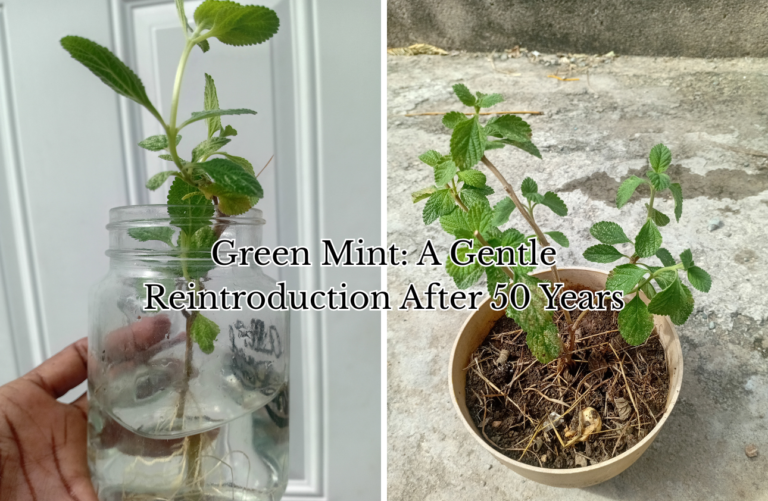
As my first plant continued to grow, I started thinking about having another one. I wanted a second plant so that if anyone stopped by looking for herbs from my garden, I might have enough to share without having to cut too much from the original plant. So, I took another cutting, placed it in a jar of water, and waited for the roots to develop. Now the roots are looking strong enough for me to move it into its own pot in the coming days, and I am looking forward to seeing how it grows.
It is a small thing, but it makes me happy to see the process starting all over again. First, it was cutting to cup; now it is cutting to share. I started with one little cutting in water, and that has grown into a plant that gives me flowers, tea, and another opportunity to learn. Now I have a second cutting to nurture, and hopefully, in time, another healthy plant to add to Queen Gee’s Garden.
Frequently Asked Questions About Jamaican Blue Vervain
What is Jamaican blue vervain used for?
Jamaican blue vervain (Stachytarpheta jamaicensis) has a history of traditional use in Jamaica and other regions. In Jamaican herbal traditions, it is often referred to as a “nerve” herb, and written accounts describe other traditional uses. These uses are part of herbal history, but they should not be confused with proven medical benefits. Scientific evidence from human studies remains limited.
Can you grow Jamaican blue vervain in a pot?
My experience so far is that Jamaican blue vervain can grow well in a container. My plant has developed from a cutting into a flowering plant in a terracotta pot in my small backyard. I pay attention to the soil before watering and make sure the plant receives plenty of light. Every garden is different, so I continue to observe my plant and learn what works best in my own space.
Is Jamaican blue vervain tea safe to drink every day?
I would not assume that drinking Jamaican blue vervain tea every day is safe. There is not enough reliable human evidence to establish a safe daily amount or long-term pattern of use. If you are interested in trying it, speak with a qualified healthcare professional, especially if you take medication, have a health condition, or are pregnant or breastfeeding. Natural does not automatically mean risk-free, and I believe it is important to be mindful of that when exploring herbal teas.
What I Am Still Learning
I am still exploring Jamaican blue vervain, both as a plant in my container garden and as an herb with a long history of traditional use. The more I learn, the more I realise there is always something new to discover. I also know that many of you grew up around herbs that your parents, grandparents, or other family members used, and those stories are worth sharing. I would love to hear from you and learn about the plants that were part of your own family traditions.
- Did your family use Jamaican blue vervain?
- What did they call it, and how did they prepare it?
- Did you grow it in your garden, or did you gather it from somewhere nearby?
Share your story in the comments. I read every one, and I would love for us to keep learning from each other.
Looking for garden and tea essentials? 🌿
If you’re enjoying your own gardening journey or exploring herbal teas at home, visit my Garden & Tea Essentials resource page, where I’ve gathered herbs for herbal tea lovers who are unable to grow their own, useful gardening tools, herb-growing supplies, and tea-brewing accessories to help you along the way.
If you enjoy exploring herbal teas and want more ideas to try, you can download my free Herbal Tea Wellness Starter Guide, which includes 32 herbal tea recipes. It is another way to continue learning about herbal tea as part of your everyday lifestyle, while remembering to consider the evidence and safety information for each herb.
A gentle reminder: This post is for educational and lifestyle purposes only and is not medical advice. Traditional uses and personal experiences do not establish that an herb can prevent, treat, or cure a health condition. Herbal products may interact with medications or may not be appropriate for everyone. Please consult a qualified healthcare provider before introducing a new herbal remedy into your routine.
Here’s to growing, learning, and sharing, one herb at a time.
With love,
Queen Gee 🌿