My Cucumber Seedlings Are Being Eaten! What Happened in My Small Container Garden?
I am sad about what is happening to my cucumber seedlings.
I was so excited about growing my own cucumber in my small backyard container garden in Jamaica. I had sown my seeds, watched them germinate, and started imagining the cucumbers I would eventually harvest. But something unexpected has happened, and I am now facing one of the challenges of growing my own food.
My cucumber seedlings are being eaten!
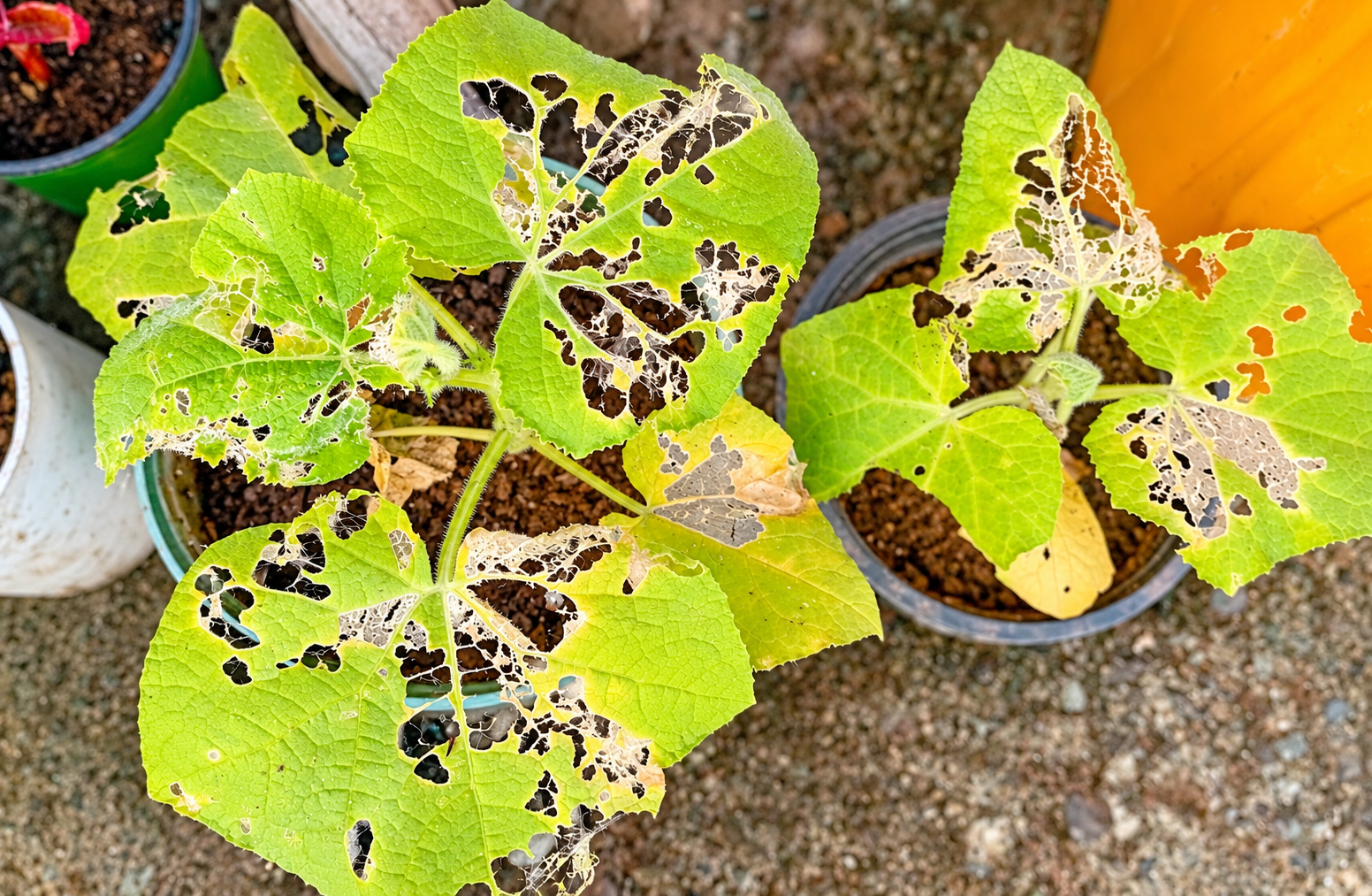
When I recently checked on my two little cucumber plants, I was almost in tears. Their leaves were covered with holes, and some sections looked as though the green tissue had been eaten away completely, leaving only parts of the leaf veins behind.
I was disappointed because I had plans for these little plants. My intention was to transfer them into larger containers, provide a trellis for the vines to climb, and eventually enjoy fresh cucumber from my own garden.
Instead, I found myself wondering what had happened and, more importantly, what I could do about it.
I inspected the seedlings, checked the leaves, and looked around for anything that might have been responsible. But I couldn’t identify any insects, caterpillars, or other creatures.
I still don’t know exactly what caused the damage. However, I am not giving up on growing cucumbers. This is another learning experience in my container gardening journey, and I want to share what happened, what I have discovered through research, and the precautions I plan to take when I try again.
In This Article
What Happened to My Cucumber Seedlings?
If you read my earlier article, Cucumber: Growing My Own for Wellness in a Small Garden, you will remember how excited I was when my cucumber seeds started sprouting.
I had sown several cucumber seeds as an experiment, and seeing those little seedlings emerge was such a wonderful feeling. I was looking forward to nurturing them and watching them develop into healthy plants.
I planned to grow cucumbers in containers because I have limited garden space. I wanted to use larger pots and a trellis to encourage the vines to grow upwards rather than spread across the available space. However, when I went to check on the seedlings, I noticed something was wrong.
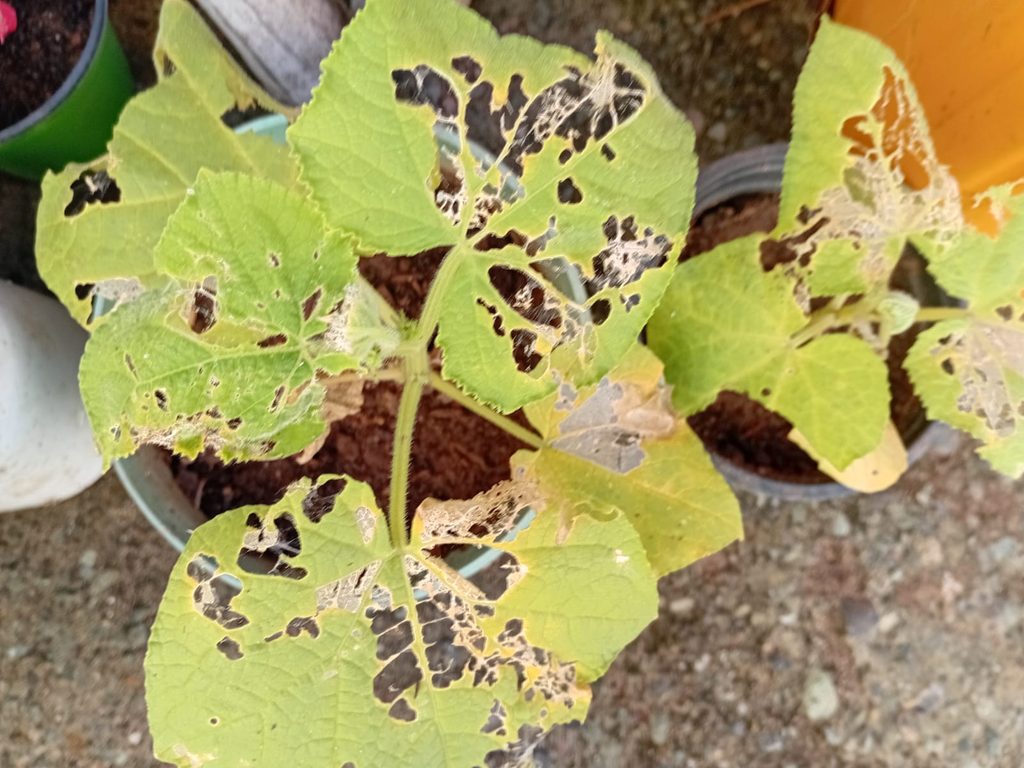
Just look at those leaves! There are irregular holes throughout the foliage, damaged edges, and areas where so much of the leaf tissue has disappeared that the leaves look almost like lace.
Both of my little cucumber seedlings have suffered damage.
I examined them to see whether I could find the culprit. I checked the leaves, including underneath them, but I didn’t see anything that could explain what had happened.
I haven’t identified any insects or caterpillars, and I don’t want to guess and start treating the plants without understanding the problem. What I do know is that something has affected my young cucumber plants, and I need to learn how to prevent this from happening again.
What Could Be Eating My Cucumber Leaves?
Naturally, my first thought was insects. The damage looks as though something has been chewing on the leaves. I started researching common cucumber seedling problems and discovered that several garden pests can cause this type of damage. Some of the possibilities include cucumber beetles, caterpillars, slugs, and other leaf-feeding insects.
1. Cucumber Beetles
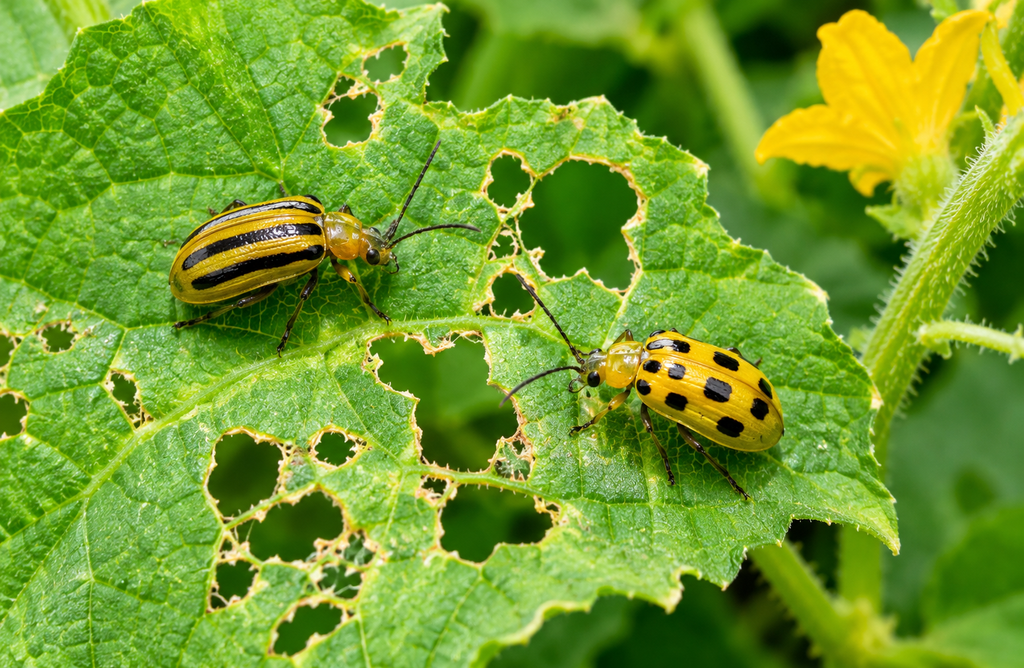
Striped and Spotted Beetles on Cucumber Leaf
Cucumber beetles are small insects that feed on cucumbers and other plants in the same vegetable family. Depending on the species, they may have yellow or greenish-yellow bodies with black stripes or spots.
They feed on leaves and can leave irregular holes behind. Young plants are particularly vulnerable because they have fewer leaves and less established growth.
I also discovered that some cucumber beetles can transmit bacterial wilt, a disease that can cause cucumber plants to wilt and eventually die.
This is another reason I want to pay attention to protecting my next batch of seedlings.
2. Caterpillars
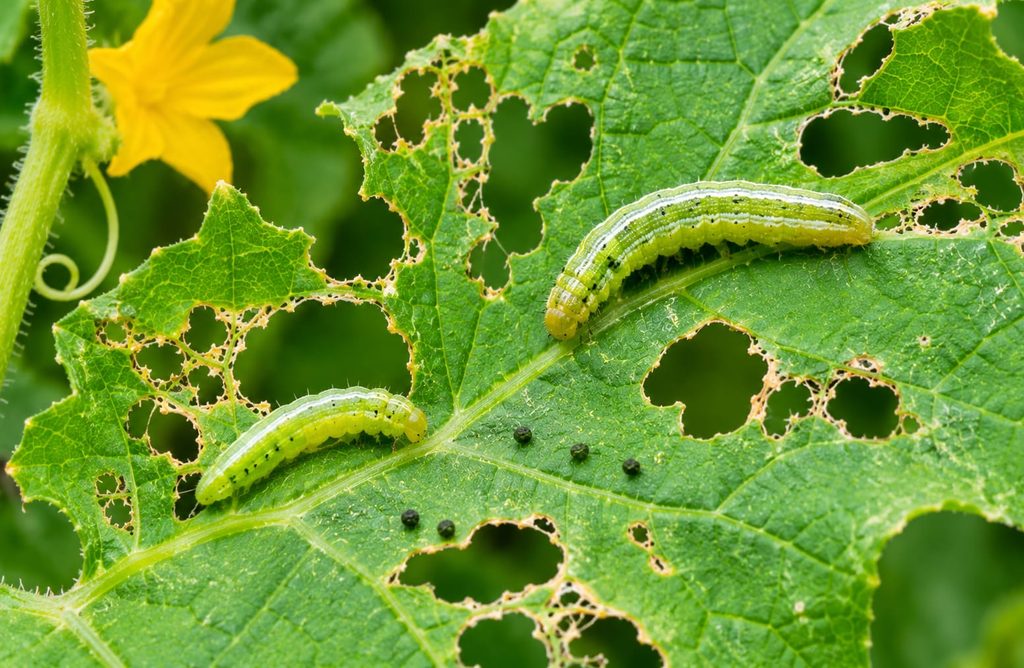
Green caterpillars feeding on a cucumber leaf with holes and damaged leaf tissue.
Caterpillars are another possibility. Some caterpillars feed on the softer tissue between the veins of leaves. This can leave the leaves looking skeletonised, with the veins still visible.
That description caught my attention because some of the damage on my cucumber seedlings looks very similar.
According to university agricultural extension resources, caterpillars may leave small droppings under the leaves, and some species create webbing around the areas where they feed.
I haven’t found any caterpillars or identified any droppings on my plants, so I cannot say whether they are responsible.
3. Slugs and Snails
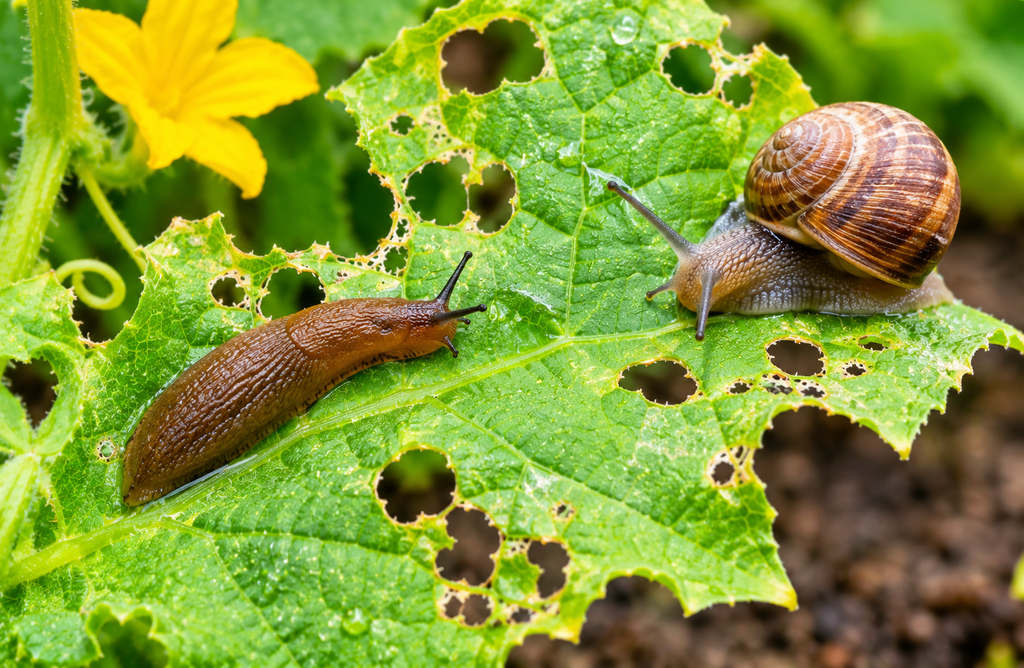
A slug and a snail crawling on a cucumber leaf with feeding holes.
Slugs and snails are also worth considering when investigating damaged vegetable leaves.
They often feed at night and can leave irregular holes and ragged edges. They may also leave shiny slime trails around plants and containers.
I haven’t seen any around my cucumber seedlings, but I now know that checking the garden after sunset can be useful when investigating this type of damage.
4. Could it be a plant disease instead?
One interesting thing I learned during my research is that holes in leaves are not always caused by insects. Certain fungal diseases produce spots on leaves. As the damaged tissue dries and falls away, holes can remain.
So, although my cucumber seedlings look as though something has been eating them, I cannot rule out other causes based on the photograph alone.
For now, I am treating this as an investigation rather than assuming I know what happened.
What I Am Learning About Protecting Cucumber Seedlings
This experience has reminded me that getting seeds to germinate is only the beginning of growing vegetables.
I was so focused on sowing the seeds, providing suitable growing conditions, and preparing for the eventual harvest that I hadn’t given enough thought to protecting the seedlings from pests. Well, I am also a newbie to growing food, so I didn’t know that I had to do all that.
I now realise that young plants need attention and protection, particularly during their early stages of growth. Based on my research, here are some of the precautions I want to take.
1. Inspect my plants regularly
I will make a habit of regularly examining my cucumber plants, checking both sides of the leaves. I will look for small holes, unusual markings, eggs, caterpillars, insects, and other signs of damage. The earlier I notice something unusual, the better chance I have of identifying the problem before it becomes extensive.
2. Check the garden in the evenings
Since some garden pests are more active at night, I plan to inspect my containers after sunset using a flashlight. This should give me a better opportunity to spot slugs, snails, and other creatures that might be hiding during the day.
3. Use insect-proof garden netting
One precaution I am particularly interested in trying is fine insect-proof garden netting. Research from agricultural extension services shows that physical barriers, such as row covers and insect netting, can help protect young cucumber plants from certain insects, including cucumber beetles.
The idea is to prevent pests from reaching the plants while they are still small and vulnerable. I will need to make sure the covering is properly secured and supported so it doesn’t crush the seedlings.
I also learned that cucumber plants need pollinators once they start flowering. Therefore, the covering will need to be removed or opened appropriately when the flowers appear so bees and other pollinators can reach them.
One thing I am considering for my next planting is fine insect netting for the garden. It can help create a physical barrier between young plants and insects while they establish themselves. I just searched and found this option on Amazon that I’m considering for my container garden. It may be useful to you, so use my affiliate link to check it out. (Note: I may earn a commission if you make a purchase, at no extra cost to you.)
4. Keep the growing area tidy
I also want to pay closer attention to the area around my containers. Removing dead leaves, checking for weeds, and keeping the garden reasonably tidy may help reduce places where certain pests can hide. I don’t expect this alone to prevent every pest problem, but it is a simple gardening habit worth developing.
5. Avoid applying treatments without identifying the problem
I have always preferred growing my plants without using chemical pesticides, and I would like to continue with that approach. However, I am learning that there are different pest-management options, including physical barriers, hand removal of visible pests, and certain biological treatments.
For example, Bacillus thuringiensis, commonly called Bt, is a biological treatment used against certain caterpillars. However, it would not control cucumber beetles or slugs.
I don’t intend to start spraying products simply because my leaves have holes. I would rather establish what is causing the damage first and choose an appropriate treatment if necessary. Even products described as natural can affect beneficial insects, so I want to be careful about what I use in my edible garden.
What About My Existing Cucumber Seedlings?
This is when my little cucumber plants started sprouting.
I haven’t completely given up on the two seedlings I already have. Although their leaves are badly damaged, I want to see whether they can recover. If their stems and growing points are still healthy, there may be an opportunity for new leaves to develop. For now, I will continue observing them and avoid disturbing them unnecessarily.
I had originally planned to transfer them into larger containers, but I think it is important to assess their condition before moving ahead with that plan. I also want to prepare properly for my next planting.
Rather than simply sowing more cucumber seeds and hoping for the best, I will have my containers, growing medium, and protective netting ready. I want to give the next batch of seedlings a better chance from the beginning.
My Plan for Growing Cucumber Again
I still want to grow my own cucumbers, and I haven’t abandoned the idea of having a trellis in my backyard garden.
I enjoy eating cucumber, making cucumber juice, and adding slices to my drinking water. Being able to harvest some from my own container garden would be a wonderful addition to my wellness and food-growing journey.
I am also becoming more interested in growing vegetables alongside the herbs I already have. My garden is gradually becoming a place where I can experiment with different plants and explore ways of producing some of the food I enjoy eating.
I know container gardening comes with its own challenges. Space is limited, containers can dry out quickly in Jamaica’s heat, and plants may be exposed to pests and other problems.
However, I am willing to learn.
My next cucumber planting will include more attention to pest prevention, regular inspections, and suitable protection for the young seedlings. I will also continue researching the best ways to grow cucumber successfully in containers in our Jamaican climate.
Gardening Is a Learning Journey, and I Am Not Giving Up!
I won’t pretend that discovering my damaged cucumber seedlings didn’t disappoint me. As I said before, I was almost in tears when I first saw my little plants like that. I was looking forward to seeing those little plants develop, and it hurts to see so much damage after taking the time to sow and nurture them. But I also know that gardening involves more than planting seeds and waiting for something to grow.
There is observation, experimentation, problem-solving, and learning from things that don’t go as planned. As someone who is still learning to grow food in a small container garden, I expect there will be other challenges along the way.
What matters is that I don’t allow one setback to discourage me from continuing. I will try again, take the necessary precautions, and keep documenting my experiences.
My goal is still to enjoy fresh, homegrown cucumber from my own backyard, even if I have to learn a few more lessons before getting there. When I eventually harvest my first cucumber, I suspect I will appreciate it even more because of everything I learned along the way.
Have you ever experienced cucumber seedlings being eaten or found holes all over your cucumber leaves? Did you manage to identify what was causing the damage, and what did you do to protect your plants?
I would love to hear from other home gardeners, especially those growing vegetables in containers here in Jamaica. Please share your experiences and suggestions in the comments. I am learning as I go, and there is always something new to discover in the garden, one seedling at a time!