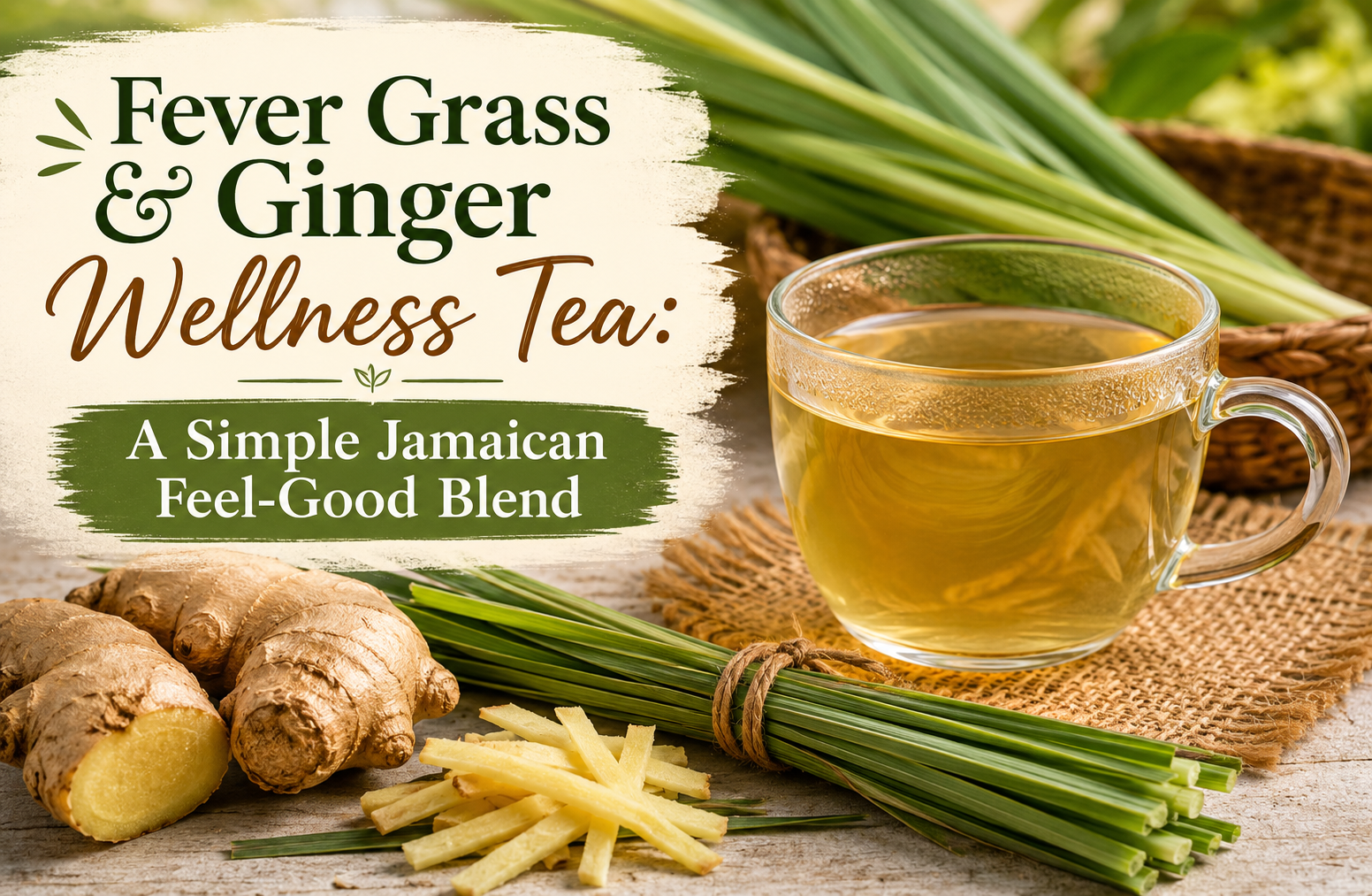
Fever Grass & Ginger Wellness Tea: A Simple Jamaican Feel-Good Blend
Some of the best herbal teas are also the simplest. This week, I will be enjoying one of my favourite traditional combinations: Fever Grass and Ginger. It’s a tea that many Jamaicans know well, and one that continues to be appreciated across generations.
What I love about herbal teas is that they don’t have to be complicated. Sometimes all it takes is a few familiar ingredients, hot water, and a few quiet minutes in your day.
Table of Contents
A Taste of Jamaican Tradition
Growing up in Jamaica, herbal teas were simply a part of life. Long before wellness became a trend, many of us were introduced to herbs through parents, grandparents, neighbours, and community traditions.
Fever grass is one of those herbs that seems to connect people. Whether it comes from your own garden, a neighbour’s yard, or the local market, it is a familiar part of Jamaican herbal culture.
Paired with fresh ginger, it creates a warming, comforting tea that many people enjoy as part of their daily wellness routine.
| 🌿 Growing plants for wellness in small spaces? I created a free Herbal Tea Starter Guide with the exact teas I drink and how I brew them gently at home. 👉 Download it here. |
The Health Benefits of Fever Grass
Fever grass, also known internationally as lemongrass (Cymbopogon citratus), has long been valued in Caribbean herbal traditions, and modern research continues to support many of its traditional uses.
- Supports fever reduction and cooling: True to its Jamaican name, fever grass has traditionally been used to help bring down fevers and ease the discomfort that comes with colds and flu. Its mild diaphoretic properties encourage the body to release heat naturally.
- Promotes calm and relaxation: Fever grass has gentle sedative qualities that can help ease anxiety, calm the nervous system, and support restful sleep, making it a wonderful evening tea.
- Aids digestion: It is commonly used to soothe an upset stomach, reduce bloating, and relieve digestive discomfort.
- Rich in antioxidants: Fever grass contains compounds such as chlorogenic acid and isoorientin that help protect the body against oxidative stress and inflammation.
- Supports healthy blood pressure: Some studies suggest that lemongrass may contribute to maintaining healthy blood pressure levels when consumed as part of a balanced lifestyle.
Please note: Herbal teas are a complement to – not a replacement for – professional medical care. If you have a health condition or take medication, consult your healthcare provider before making any herb a regular part of your routine.
The Health Benefits of Ginger
Ginger (Zingiber officinale) is one of the most widely researched herbs in the world, and one of the most beloved in Jamaican kitchens and wellness traditions alike.
- Powerful anti-inflammatory: Ginger contains gingerols and shogaols, natural compounds with strong anti-inflammatory and antioxidant properties that may help reduce chronic inflammation in the body.
- Settles the stomach: Ginger is widely recognised for its ability to relieve nausea, motion sickness, and digestive discomfort. It is a gentle and effective aid for an uneasy stomach.
- Supports immune health: Its antimicrobial and immune-stimulating properties make ginger a natural ally during cold and flu season, helping the body mount a stronger response to illness.
- Warms and energises: Ginger has a natural thermogenic effect. It gently warms the body from the inside, improves circulation, and can provide a natural energy lift without caffeine.
- Supports joint comfort: Regular consumption of ginger has been associated with reduced muscle soreness and improved comfort in people experiencing joint stiffness.
As with all herbs, enjoy ginger tea mindfully. Those who are pregnant, on blood thinners, or managing a chronic health condition should check with their doctor before consuming large amounts regularly.
Why I Enjoy This Blend
One of the reasons I love Fever Grass and Ginger tea is its simplicity.
The ingredients are easy to find, the preparation is straightforward, and the flavour is both refreshing and comforting. Together, these two herbs complement each other beautifully. The light citrus brightness of the fever grass balances the warm, spicy depth of the ginger.
I also appreciate how this blend reflects something I value deeply: using what is available, supporting local growers and vendors, and staying connected to traditional practices that have been passed down through generations.
Growing Fever Grass in My Container Garden
One of my intentions for my garden this season is to add fever grass to my container collection. Right now, I source it from the market or a neighbour’s yard, and while that connection to community is something I treasure, having it growing right outside my door would mean even more direct access to fresh herbs for my daily wellness teas.
I was recently told that if you grow fever grass in a container, you will always have a steady supply. That is exactly the kind of abundance I want to cultivate in my wellness garden.
Here is what I have learned about growing fever grass in a container:
- Choose a large pot: Fever grass grows in clumps and spreads, so it needs room. A pot that is at least 12 inches wide and deep gives the roots space to establish.
- Use well-draining soil: A good potting mix works well. Fever grass does not like sitting in waterlogged soil.
- Give it full sun: It thrives in warm, sunny spots, which makes it perfectly suited to a Jamaican garden or any tropical climate.
- Water regularly but don’t overdo it: Keep the soil moist, especially while it is establishing, but allow it to dry out slightly between waterings.
- Harvest from the outside in: When harvesting, take the outer stalks first and allow the centre of the clump to keep growing. This way, the plant continuously replenishes itself.
- Divide when it gets full: Once your clump grows large, you can divide it and repot, sharing with a neighbour or simply expanding your own garden.
With fever grass and ginger both growing in my container garden, my Fever Grass and Ginger tea will truly be a garden-to-cup experience. That is one of the most satisfying things about growing your own herbs.
Recipe #25: Fever Grass & Ginger Wellness Tea
Here is how I make Fever Grass and Ginger tea at home. This is one of the simplest brews in my weekly rotation – no fuss, no special equipment, just two powerful herbs and some hot water. I love that it takes less than ten minutes from my friend’s garden to the cup, and the result is a tea that feels both nourishing and grounding.
Ingredients
- Equal parts fresh fever grass
- Equal parts fresh beaten ginger
- Hot water
Directions
- Add the fever grass and ginger to a teapot or cup.
- Pour hot water over the herbs.
- Steep for 5–7 minutes.
- Strain if desired and enjoy.
Queen Gee’s Tip: This is the ultimate Jamaican “feel good” tea. Simple, warming, and rooted in tradition. If you want a stronger brew, let it steep a little longer. I sometimes add a squeeze of fresh lime and a drizzle of honey to mine, which lifts the flavour beautifully and adds its own wellness benefits. Sip it slowly and let it do its work.
| 🌿 Growing plants for wellness in small spaces? I created a free Herbal Tea Starter Guide with the exact teas I drink and how I brew them gently at home. 👉 Download it here. |
Keeping Traditional Herbal Wisdom Alive
One of the reasons I enjoy sharing herbal teas is that they help preserve traditions that have served our communities for generations.
Whether you grow herbs in your own garden, receive them from a neighbour, or purchase them from a market vendor, every cup connects us to a rich heritage of practical wellness and community knowledge.
For me, herbal wellness is not about chasing the latest trend. It is about appreciating simple practices that fit naturally into everyday life.
This week, I will be enjoying my Fever Grass and Ginger tea and taking a few moments each day to slow down and appreciate the simple things.
What herbal tea are you enjoying this week?
I will be sharing my Fever Grass and Ginger tea moments and my container garden journey this week on Instagram and Facebook. Come along and let’s grow and sip together. Follow me and join the conversation.